
Introduction
When you see those two lines on the pregnancy test, your mind starts racing. One of the first big milestones, and one of the most nerve-wracking moments, in ultrasound pregnancy care is that first ultrasound appointment. You get to see your baby for the very first time.
A USG scan uses sound waves to show real-time black and white images of the internal organs in the abdomen. It is safe, quick and an essential part of prenatal care. This guide explains what a USG scan is, what happens during the procedure and why it’s important.
What is the Full Form of USG?
The USG full form is Ultrasonography. Many people simply call it an ‘ultrasound’. It is a safe way for your doctor to view your baby inside the womb using high-frequency sound waves instead of radiation.
How Does USG Work?
Imagine shouting in a cave and listening for the echo. A USG machine works in a similar way. A small handheld probe called a transducer is placed on your belly. It sends out safe, high-frequency ultrasound waves into your body. These waves bounce back (echo) when they meet internal structures, such as your baby. A computer then converts these returning echoes into images on the screen. The image shades usually represent:
- Black: Fluid (like amniotic fluid)
- White: Bone
- Shades of grey: Soft tissues and organs
What Are the Different Types of Scans in Pregnancy?
You may have several scans during pregnancy, each for a different purpose.
- Dating Scan (6–9 weeks): It is done to confirm the pregnancy, check the heartbeat and estimate your due date.
- NT Scan (Nuchal Translucency) (11–14 weeks): This scan, along with a blood test, assesses for the chance of certain genetic conditions.
- Anomaly Scan (18–22 weeks): This is a detailed assessment of the baby’s brain, heart, spine, kidneys and other organs. Many clinics also provide an ultrasound video so parents can rewatch the baby’s movements.
- Growth Scan (3rd trimester): It’s done to check the baby’s growth, amniotic fluid level and the baby’s position (head-down or breech).
Why Is USG Important for Pregnancy?
A USG scan gives your doctor valuable information to guide your prenatal care. It helps to:
- Confirm the pregnancy is in the right place.
- Determine your accurate due date.
- Check for multiple pregnancies (twins or triplets).
- Monitor your baby’s growth.
- Assess the position of the placenta.
- Screen for potential health concerns.
How to Prepare for A USG Procedure?
How to Prepare for A USG Procedure?
Getting prepared for your ultrasound scan really depends on the area being looked at. Your doctor will let you know exactly what you need to do based on the purpose of your scan.
1. Before Appointment
Before the appointment, your doctor might give you some specific instructions. These may include:
- Not eating or drinking for a few hours before your scan
- Drinking water and not using the bathroom, so you arrive with a full bladder
- Eating lighter meals the day before your appointment
It’s really important to follow these directions carefully. Because when you’re prepared, the ultrasound technician can get much clearer pictures of what’s happening inside your body.
2. During the Scan:
- You will lie on a comfortable bed.
- A clear, water-based gel is applied to your belly to help sound waves travel better. It may feel a little cold.
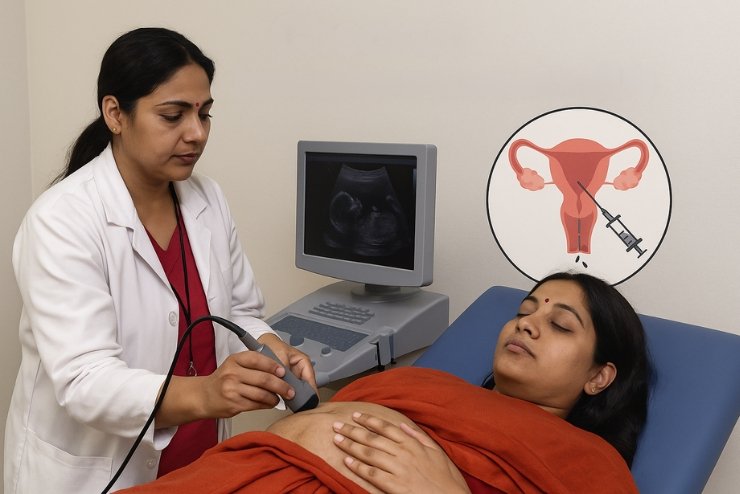
- The doctor or technician will gently move the transducer over your abdomen.
- You will be able to see your baby on the screen! The doctor will point out features like the heartbeat, hands or feet.
Different clinics may use different types of ultrasound machines, which can influence the ultrasound price depending on the technology. Sometimes, for an early pregnancy, the doctor might suggest a transvaginal scan for clearer images. This is safe and commonly used in the first few weeks.
3. After the Scan:
- Cleaning Up: The gel will be wiped off your belly.
- The Results: The sonographer will take all the necessary measurements and images. A radiologist or your doctor will review them and discuss the ultrasound report with you. Some clinics provide a preliminary report right away, while others share results during your next prenatal visit.
- Ask Questions: Don’t hesitate to ask if you don’t understand something on the screen or have a question about the process.
Is the USG Scan Safe?
Yes. After many years of use, there is no evidence that diagnostic ultrasound harms either the mother or the developing baby. It is one of the safest medical imaging tools available.
Conclusion
A USG scan is a safe, quick and widely used procedure that helps monitor your baby’s health and gives you a first glimpse of your little one. It’s an emotional moment that combines important medical care with the joy of seeing your growing baby. Always feel free to ask your doctor any questions you have. Your care team is here to guide you through every step of your pregnancy journey.